
What Is A Dental Implant?
A dental implant is a titanium screw that is surgically placed into the jawbone, to act as a replacement for a missing tooth. Over time, the dental implant fuses with the jawbone in a process called osseointegration, where it becomes stable enough to support prosthetic teeth like crowns, bridges and even dentures, allowing you to regain chewing function.
Dental implants are an increasingly popular treatment option for replacing missing teeth, as they provide superior comfort and functionality compared to other teeth replacement options.
Dental implants are an increasingly popular treatment option for replacing missing teeth, as they provide superior comfort and functionality compared to other teeth replacement options.
Types of Implant Prostheses
1. Single Implant Crown – To replace a single missing tooth.
2. Implant Bridge – To replace several missing teeth in a row.
3. Full Arch Prosthesis – To replace all missing teeth in an arch with a full fixed bridge supported by 4–6 implants.
4. Implant-Supported Dentures (Overdentures) – Implants that support a removable denture.
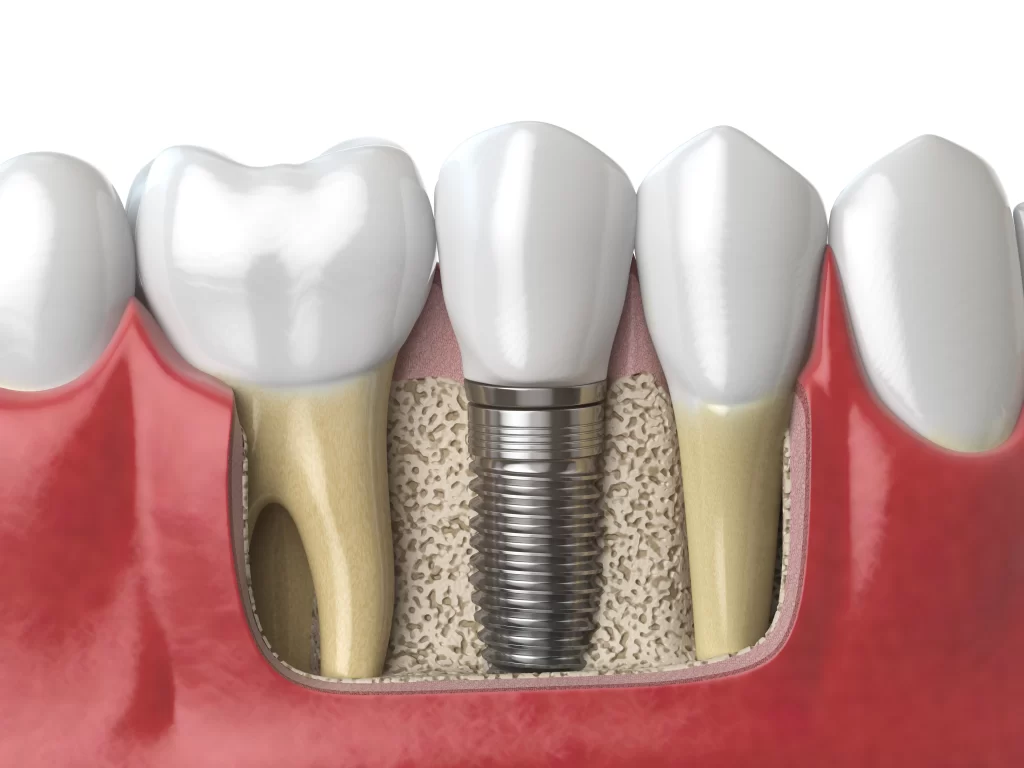
Procedure for Dental Implants
Step 1: Consultation
Your dentist will assess your treatment goals, medical and dental history, and perform a thorough dental examination—including X-rays— to determine if dental implants are suitable for you. Based on the findings, your dentist will create a personalized treatment plan, explain your treatment options, and discuss the costs involved.
Step 2: Implant Surgery
On the day of surgery, the implant is placed into the jawbone under local anesthesia. Most patients tolerate the procedure well. Teeth extraction and bone grafting (addition of artificial bone) may also be performed on the same day if required. Once the implant is properly positioned, the gums are sutured to close the surgical site.
Step 3: Post Surgery
Follow post-operative instructions carefully to support healing, including rest, medication, oral hygiene, and diet adjustments.
Step 4: Restoration of Implant
The implant usually takes about 3- 4 months to osseointegrate with the bone, though healing time may vary, especially if bone grafting was done. Once healing is completed, an impression is taken to fabricate a prosthesis that will be attached to the implant. This can be a crown, bridge, or denture that restores chewing function and your smile aesthetics.
Step 5: Follow up and Maintenance
Routine dental check-ups every 6 months help ensure the implant remains healthy. X-rays may be taken at these visits to assess the integrity of the implant and its surrounding bone. Implants require the same level of care and maintenance as your natural teeth to ensure long-term success of your implant.
Benefits Of Dental Implants
Common FAQs
Implants may be suitable for you if you:
- Are missing one or more teeth
- Have healthy gums
- Have sufficient bone (or open to bone grafting if required)
- Are in good general health
- Do not smoke or have excessive alcohol intake
Potential risks include:
- Infection at the implant site
- Implant not integrating with the bone (implant failure)
- Nerve damage (uncommon, and usually avoidable with proper planning)
- Sinus issues (for upper implants, if placed too close to the sinus cavity)
These risks are minimised through careful planning, advanced imaging, and proper surgical technique.
Proper post-operative care is crucial to the success of the implant procedure.
Some post operative instructions may include:
- Taking medications as prescribed
- Resting and avoiding strenuous activities
- Consuming soft diet
- Application of cold packs to reduce swelling
- Maintenance of good oral hygiene
- Avoiding tobacco or alcohol
There are several solutions if you have insufficient bone for implant placement. These include:
- Bone grafting: Bone material is added to the implant site, which integrates with your natural bone over time and increase bone volume
- Sinus lift: This procedure gently lifts the sinus and adds bone beneath it to create space for implants at the upper back teeth
- Alternate implant designs: The use of shorter, narrower or angled implants in some cases where bone is limited, to avoid need for bone grafting
Your Smile Matters—
Schedule Your Appointment Today!
Schedule your dental visit with ease through our streamlined booking system—your journey to a healthier, more confident smile begins here.