
What Is Root Canal Treatment?
Root canal treatment is a dental procedure performed to save a tooth that is badly decayed, infected, or damaged. Inside every tooth is a soft tissue called the pulp, which contains nerves and blood vessels. When the pulp becomes infected or inflamed—often due to deep decay, cracks, or trauma—it can cause pain, swelling, or even lead to an abscess.
A root canal involves removing the infected pulp, cleaning and disinfecting the root canals, and then sealing it to prevent further infection. Afterward, the tooth is usually restored with a filling or crown to strengthen and protect it.
Signs that a Root Canal Treatment may be required:
- Persistent Toothache
- Lingering sensitivity to hot and cold
- Swelling or tenderness in the gums
- Darkening or discoloration of tooth
- Pimple or abscess near the tooth
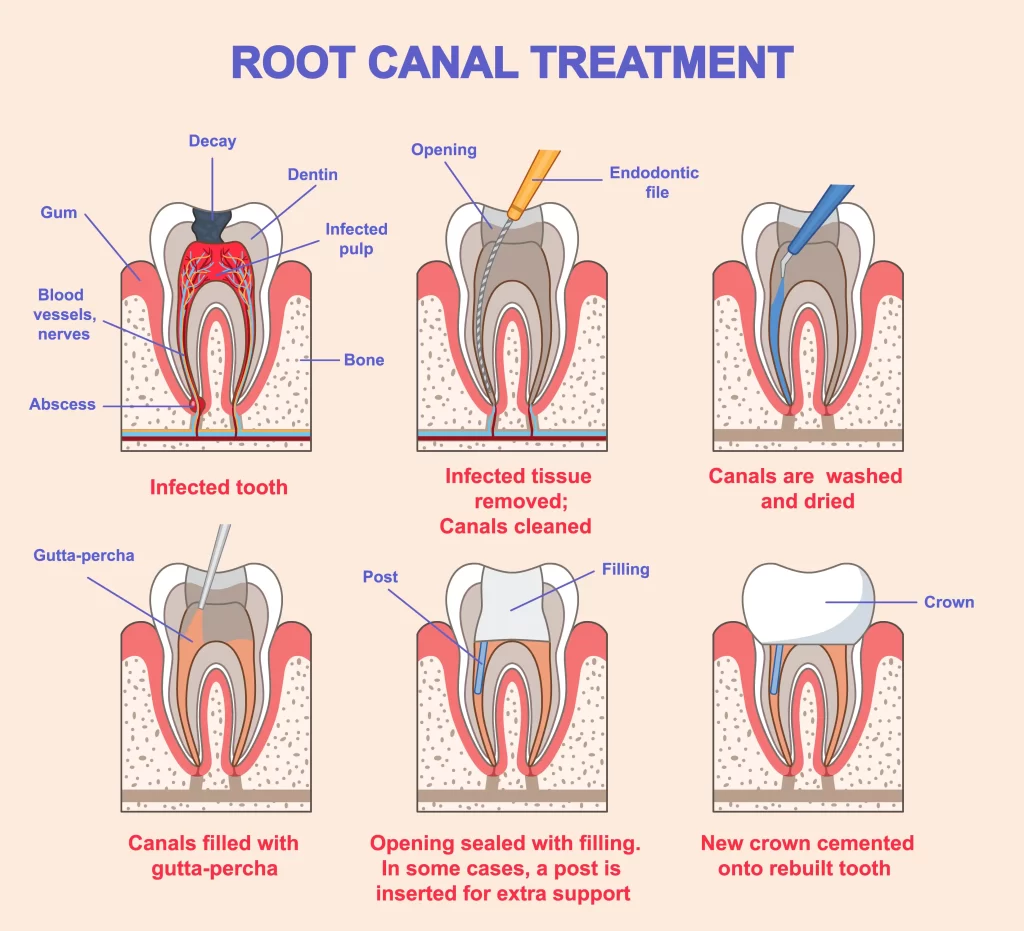
Procedure for Root Canal Treatment
Step 1: Administer Local Anesthesia
Treatment begins by numbing the tooth with local anesthesia. This ensures that you remain comfortable and pain free during the treatment.
Step 2: Rubber Dam
A rubber dam is a small flexible rubber sheet that is placed over your tooth during root canal treatment. It helps to isolate the tooth and prevents saliva, bacteria and moisture from entering the tooth while the canals are being disinfected.
Step 3: Access Opening
A small opening is made on the tooth to access the pulp chamber and the root canals where the infection is present.
Step 4: Cleaning Root Canals (Instrumentation)
Fine, flexible instruments called files are used to remove the infected or necrotic pulp tissue inside the root canals as well as to shape the canals .
At our clinic, we use technology like apex locators and rotary systems to enable smooth efficient cleaning of the canals.
At our clinic, we use technology like apex locators and rotary systems to enable smooth efficient cleaning of the canals.
Step 5: Disinfection
The root canals are repeatedly irrigated with antibacterial solution (sodium hypochlorite) to dissolve pulp tissue and further remove any remaining bacteria in areas where files are unable to reach.
Step 6: Filling out Root Canals (Obturation)
After cleaning and disinfecting, the root canals are tightly sealed with a biocompatible material called gutta-percha to prevent bacteria from re-entering and causing infection.
Step 7: Temporary or Permanent Filling
A filling called a core is placed to seal the access hole. If the tooth is too badly damaged, a post may be placed to support the core.
Step 8: Crown
A crown is placed after root canal treatment to protect and strengthen the tooth.
Common FAQs
It is normal to feel mild discomfort or sensitivity for a few days. This can usually be managed with over-the-counter pain relief. Do avoid chewing on the treated tooth until it is fully restored with a crown or permanent filling.
After root canal treatment, the tooth can become weaker and more brittle over time, especially if it was badly decayed, cracked or has large fillings. Placing a crown helps to:
- Act as a protective layer to prevent teeth from fracturing
- Restore strength and function of tooth for chewing
- Seal the tooth completely to prevent reinfection
- Improve the appearance of tooth that has been discoloured
The main alternative is tooth extraction, but preserving your natural tooth, if possible, is almost always the better option for long-term oral health and function. Your dentist will assess your tooth condition and determine which treatment is appropriate for you.
Concerned About Your Tooth?
Schedule a consultation and let our dentists guide you through the best treatment options for your tooth.